







The author argues that college sports are a public trust, not privately owned by schools or conferences.
The author calls on Congress to pass legislation to stabilize the system for the benefit of all schools and athletes.
Proposed solutions aim to preserve college sports by allowing for collective media rights and new revenue streams.
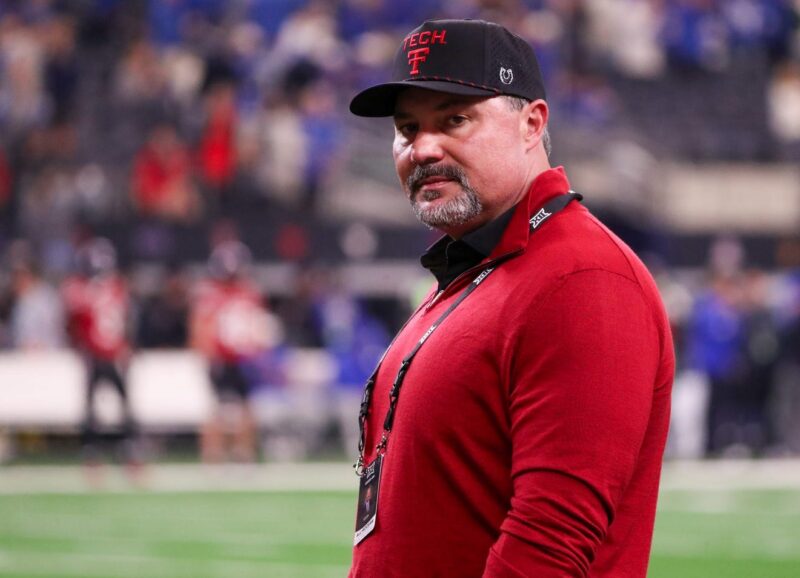
Cody Campbell is Chairman of the Board of the Texas Tech University Board of Regents and Founder of Saving College Sports, a non-profit organization formed to preserve the institution of intercollegiate athletics.
Until recently, the question of who owns intercollegiate athletics has never been a question our country had to ask. Today, however, largely due to a unanimous U.S. Supreme Court Decision, Congress must step in and decide who controls — and who benefits — from the various untethered parts, pieces, and whole of intercollegiate athletics.
Regulatory anarchy, and athletic departments facing financial insolvency, and a flagrant power grab by the most powerful names and entities in college sports have been well documented by alarming headlines.
College sports are a unique and undeniable cornerstone of American culture. They’ve provided access to higher education for more kids than any program other than the G.I. Bill. This access demonstrably molds today’s athletes into the leaders of tomorrow with 60%+ of American CEOs having a college sports background. The lessons that are forged on the playing field create a stronger country with stronger leaders.
America’s unparalleled leadership development program of collegiate athletics is now in a heap of a mess.
Let’s look at the history: From the land-grant colleges of the Morrill Act (1862) to the taxpayer-supported stadiums, scholarships, and tax-exempt status, college sports has never been the private fiefdom of any school, conference or cartel. In truth, public money — direct and indirect — has underwritten athletic facilities, coaching salaries, medical care, and the very education that makes them “student” athletes. Even the most elite private programs ride on the coattails of federal student aid, charitable deductions, public infrastructure and media regulation that make Saturday afternoons possible. College sports are a Public Trust, built by the American people, largely owned by public institutions, and carried on the backs of taxpayers because we collectively believe in the greater good. College sports certainly don’t exclusively belong to the Power conferences. Despite posturing that implies ownership, these entities don’t own a damn thing.
Each school, conference, media giant and special interest are now in a feeding frenzy to grant a larger piece of the pie — they all want legislation that gives them more money, more TV time and more prominence — almost always at the expense of smaller college athletics programs, programs that provide the same benefits to our country. They realign conferences to stretch illogically across an entire continent, knowing that it will severely injure individual institutions and communities as expenses skyrocket and age-old rivalries die. They negotiate media deals to crowd out small schools and monopolize revenue. They cause non-revenue sports (women’s and Olympic sports) to be cut, fees to be charged to students, and tuition to be raised. Cutthroat business tactics may make sense in a corporate boardroom, but they are pushing college sports into something more fragile and much less beneficial to our country.
University and conference leaders rightfully explain that they have no choice but to follow the money, purely out of financial self-preservation. But the outcome of those decisions — taken collectively — creates what is approaching a financial monopoly and threatens the vast majority of college athletic departments and athletes.
The Constitution’s Preamble is not merely ornamental: “We the People … promote the general Welfare” is its sovereign and sacred charge. Government’s solemn duty is not to just stand by and let the strongest programs crush the weaker ones. Its duty is not to allow the rules to be written by institutions and organizations who can afford to hire the most expensive lobbyists. Government’s responsibility is to stabilize the system, de-fang the misplaced sense of ownership and entitlement, and maximize the commercial value of this asset that “We the People” collectively own — so that every school, every sport, every athlete, and every community that has invested its heart and treasure may continue to thrive.
To this end, President Trump’s 2025 Executive Order, the bipartisan legislation recently released by Democratic Senator Cantwell and Republican Senator Schmitt, and the proposals brought forward by the independent organization, Saving College Sports, are aimed at preservation of the entire system and the immeasurable benefits that it provides us all. Recent momentum behind these proposals demonstrates rare bipartisan willingness to work together to save one of the few remaining institutions that unites people of all political persuasions.
Measures must be taken to make the system permanently financially stable. Many of these measures are included in the above-mentioned legislative proposals and can provide the colleges long-term optionality to collectively pool media rights, and grant freedom to generate revenue through myriad additional avenues that make common business sense.
Bottom line is this: Simply do what is right for the entire country — all schools, all sports, both big and small. This can all be accomplished while honoring existing media contracts, but through ensuring that future arrangements serve the public trust, not just a privileged few.
It is incumbent on Congress to promote the general welfare, to work for the common good, and preserve college sports for our children and grandchildren. The American people built it. The American people own it. Now, the American people and our elected representatives must protect it.