












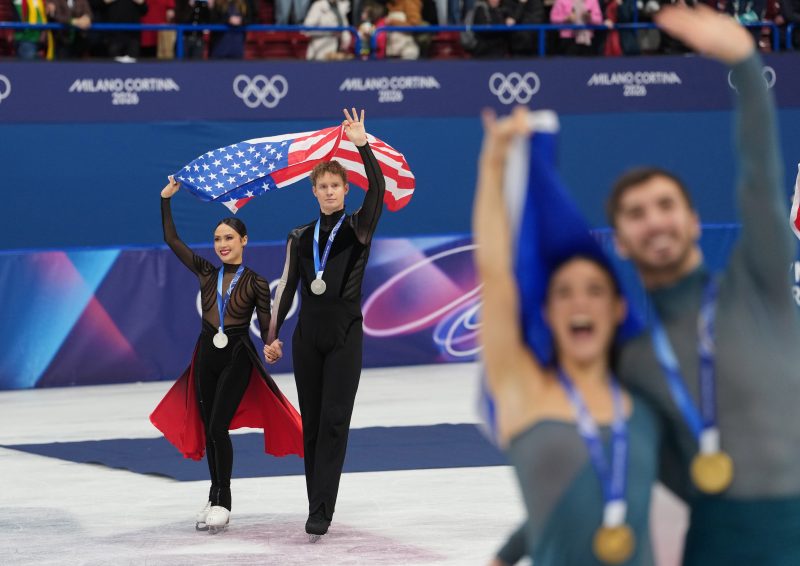
MILAN — U.S. Figure Skating did not appeal the controversial finish to the 2026 Winter Olympics ice dance competition that involved Team USA’s Madison Chock and Evan Bates and France’s Laurence Fournier Beaudry and Guillaume Cizeron, a USFS official told USA TODAY Sports.
‘There has been a lot of thoughtful, and at times emotional, discussion about the ice dance competition in Milan,’ USFS CEO Matt Farrell said in a statement to USA TODAY Sports. ‘Working together with Madi and Evan after the Games, we will have thoughtful and intentional discussions about the best way to support them and the future of the sport.
‘For now, we plan to join them in supporting the success of U.S. Figure Skating in Milan.’
The 24-hour window to appeal the Feb. 11 results has long closed. Outside of an appeal, sending a letter of concern to the International Skating Union is always an option.
The statement comes after public scrutiny and calls to challenge the results of the ice dance competition, which many believe was scored incorrectly. Going into the free dance, Beaudry and Cizerone led Chock and Bates by 0.46 points, virtually making it a toss-up in the final performance.
Chock and Bates delivered a flawless showing with their ‘Paint It Black’ program, and earned a score of 134.67 to bring their total to 224.39. Beaudry and Cizerone followed the American pair and had a strong showing, but did have some slight mistakes that gave the indication Chock and Bates would be the winners. However, the French pair was given a 135.64 for a total of 225.82 points, securing the gold medal.
Amid the confusion over the results was the reveal of the judges scores, which added fuel to the fire. The biggest source of ire was the scores French judge Jezabel Dabouis submitted. She awarded Beaudry and Cizeron a 137.45 and Chock and Bates a 129.74. That more than seven-point differential was the largest among any of the judges, and the 129.74 was Chock and Bates’ lowest score, fueling speculation she purposely favored her home country’s team.
Immediately after the medal ceremony, the couple were flooded with emotion and tears, calling it a ‘bittersweet” moment to just fall short of gold. The following day of the competition, the couple said they had spoken to their coach about the scoring, and believed the reaction from the results was not good for the sport.
“Any time the public is confused by results, it does a disservice to our sport,” Chock said. “It’s hard to retain fans when it’s difficult to understand what is happening on the ice. I think there needs to be a lot more clarity for the skaters, for the coaches and for the audience, in order to just have a solid fan base moving forward. People need to understand what they’re cheering for and be able to feel confident in the sport that they’re supporting.”
The four-time Olympians received an outpouring of sympathy from fans and fellow figure skaters. It was the couple’s first Olympic ice dance medal, in addition to the two gold medals they’ve won in the team event, including in this year’s Games.
“It means a lot that people are voicing their opinions on our behalf,” Bates said. “The way that we skated and the way that we’ve approached chasing these goals, hopefully has resonated with people at home even in our response. I think hopefully that, too, can reflect the Olympic spirit.”