











MILAN — Ilia Malinin didn’t want to skate the long program in the Olympic figure skating team competition. He wanted to rest up for the more important individual men’s event beginning Tuesday. His coaches felt the same way. It was a definite no.
But when U.S. Figure Skating called upon him late Saturday night, saying the event was going to be too close and potentially lost without him, he had no choice but to say yes.
It turned out to be the best decision of his young career.
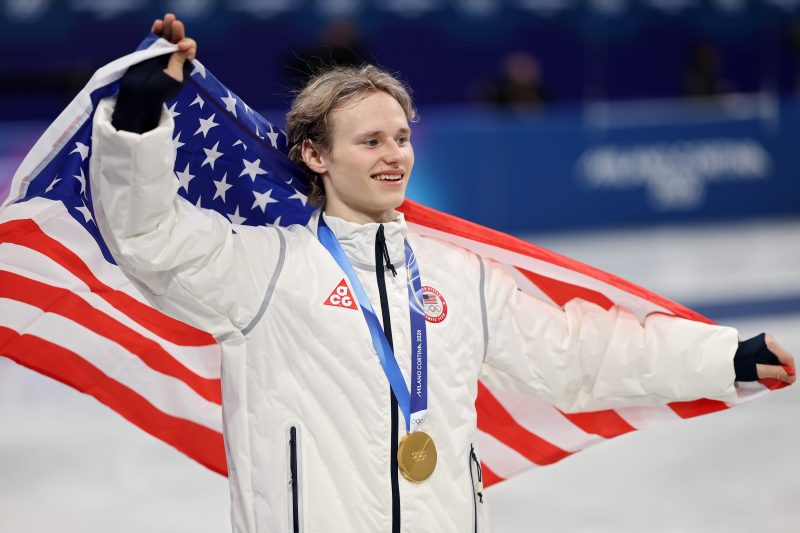
On a night in which the Olympic team competition finally arrived as a major event after three underwhelming attempts in 2014, 2018 and 2022, Malinin saved the United States from an embarrassing final-day collapse and delivered the Americans the well-earned gold medal.
“Absolutely, this is definitely the smartest decision I’ve made,” Malinin told USA TODAY Sports during an exclusive interview after the medal ceremony. “I got a chance to just really feel the ice, feel the environment, just feel the atmosphere. I’m just so proud of everyone and myself for what we put out there tonight.
‘This definitely is one of the happiest days of my life, and really just sets me up in the right mood and mindset for the next days to come.”
The 21-year-old self-proclaimed “Quad God” was backstage when the scores of the only man who could beat him, Japan’s Shun Sato, popped onto the big screen in the Olympic figure skating venue. Malinin’s long program score was 200.03 points.
Sato’s? 194.86. Malinin had done it. The Americans had won.
At that moment, Malinin came running from behind the curtains to celebrate with his teammates in the rink-side team boxes. But he didn’t just dash to them — he dove into the cheering collection of happy Americans, his arms raised high. He was lifted off his feet. He was flying. This was the image of the athlete in triumph. He would worry about how much this took out of him for the individual event on another day. This was the highlight of his already stellar young career.
This is the second consecutive Olympic gold medal for the United States in the team event. Ice dancers Madison Chock and Evan Bates, who won both of their team competitions, are the only Americans to repeat as champions. Last time, they had to wait two and a half years to receive their medals due to the excruciating long investigation of the Kamila Valieva doping scandal. This time, they got them right away.
The final night in the three-day competition showed that this is a test of wills, and skating skills, but it’s also basic math. As the evening began, the United States carried a five-point lead over Japan into the final three long programs: pairs, women and men.
The evening started off well for the Americans, who gained an unexpected point when pairs team Ellie Kam and Danny O’Shea finished fourth, not fifth, in the pairs long program. The little things mattered on this night.
That became evident when three-time U.S. champion Amber Glenn turned in a nervous and underwhelming performance to finish third, two places behind Japan’s Kaori Sakamoto. All of a sudden the competition was tied with just one discipline left, the men’s long program. Had Kam and O’Shea not gained that extra point, Japan would have taken the lead.
And then it came down to what most Olympic figure skating competitions are all about: one skater against another. Ilia Malinin against Shun Sato. Malinin won last year’s world championships, his second in a row. Sato was sixth. Sato was replacing countryman Yuma Kagiyama, who defeated a shaky Malinin in the short program Saturday night.
Both men rose to the occasion; Malinin just did a little bit more. “Ilia was spot on with what he needed to do,” said 1988 Olympic champion Brian Boitano, co-host of USA TODAY’s Milan Magic podcast.
To think that deciding battle might never have happened had Malinin not said yes to skating the long program.
But he did.