
Connect with us

Hi, what are you looking for?

Sports

Star QB vs. a city: College football has its first Cuban Super Bowl

Indiana University quarterback Fernando Mendoza and University of Miami coach Mario Cristobal are both Cuban-American and from Miami.
The game features numerous intertwined connections, with many players and coaches having attended the same local high school.
This championship represents a significant cultural moment for Miami’s large Cuban-American community, which has deep ties to both teams.

MIAMI ― Banners flap along South Beach’s Alton Road, heralding both Hoosiers and Hurricanes. 

Digital billboards all over town cheer on both Indiana University, led by their wunderkind hero Fernando Mendoza, and the hometown once-dynastic team, the University of Miami Hurricanes. Local radio and podcast personalities spew endless analyses and interview abuelas, trying to gauge a winner. 

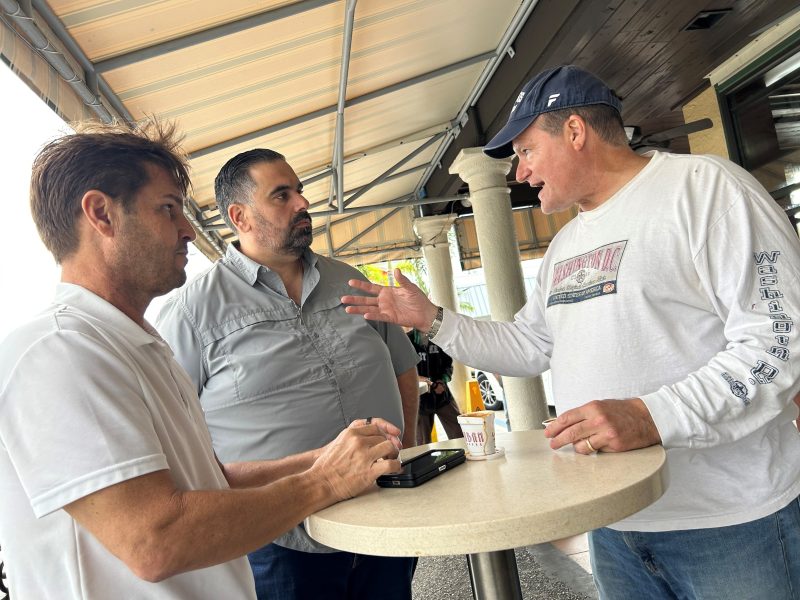
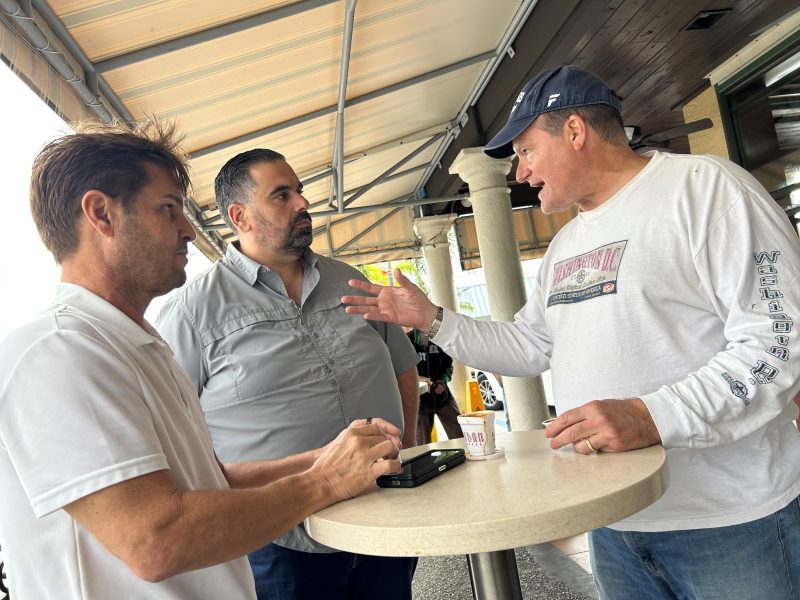
At the coffee window at La Carreta on Bird Road, an epicenter of the Cuban community in Miami’s Westchester neighborhood (pronounced “Weh-ché-te” in the truncated lingo of Cuban-Americans), recent talk pinged between business and politics and an upcoming national college championship game that is roiling this tropical city. 

It’s huge,” said Nicolas Gutierrez, 61, an attorney, as he shared shots of strong Cuban coffee with friends outside La Carreta. “It’s the biggest thing that I can remember we’ve ever had, sports-wise.”

They’re calling it: the ‘Cuban Super Bowl.’

Mendoza is Cuban American and a product of a local Catholic all-boys school. The Hurricanes are led by head coach Mario Cristobal and offensive line coach Alex Mirabal – both also Cuban American from Miami. On Jan. 19, they’ll face off in the College Football Playoff National Championship game just outside, of all places, Miami, where more than 1 million Cubans and Cuban Americans reside.

For weeks during the playoffs, Mirabal drove past a digital billboard near his Miami home heralding the national championship game to be played there. For weeks, the sign didn’t register − just another speck blurring past him on his drive to work.

Then, on Jan. 16, he drove past it again. This time it landed, hitting him like a clean, open field tackle: He and the Hurricanes were playing for the national title in his backyard.

‘It’s a reality,’ Mirabal told USA TODAY. ‘I think you have to be where your feet are at. But, it’s pretty cool. I’m not going to say, ‘It’s just another game.’ There is no other game after this one.’

Having so many Cuban Americans involved in the title game is also a testament to the hard work and grit that comes from the exile community, he said.

‘I’ve known [Cristobal] since he was 14 years old,’ Mirabal said. ‘This program is built under the character, values and morals of his mom and his dad. That came from their Cuban roots, their Cuban ancestry.’

‘Are coach Cristobal and myself proud of the fact that we’re Cuban?’ Mirabal clapped back. ‘Damn right.’

The ‘Natty in Miami’− as the game is heralded in some corners − also features more intertwined storylines than a thicket of mangrove roots. 

Mendoza and younger brother Alberto, his backup QB at Indiana, both graduated from Christopher Columbus High School in Miami – where Cristobal, Mirabal and several Miami players also attended.

Cristobal played football there in the 1980s with Mendoza’s father, Fernando Mendoza IV, and Mendoza’s mom, Elsa, was a standout tennis player at the University of Miami.

South Florida has seen its share of championships, from the Miami Dolphins and Miami Marlins to the Miami Heat and the Hurricanes of the 1980s and ‘90s. But never has such a confluence of Cuban competitors descended on the area.

“In the history of sports in America, there has never been a Cuban moment like this one,” Dan Le Batard, South Florida media personality and head of the “The Dan Le Batard Show with Stugotz” podcast, told USA TODAY. “This hasn’t happened, not even in baseball, which is the preferred sport of Cubans. We’ve had Cuban excellence. We haven’t had this.”

‘This kid is special’

On South Beach, in anticipation of the crowds drawn to the national championship game, city leaders closed parts of Ocean Drive in front of Lummus Park to traffic, converting the stretch of street lined with Art Deco hotels into a pedestrian-only party. Palm trees, still wrapped in holiday lights, dot the iconic avenue, as strollers braced against a cold snap. Passersby paused to take selfies in front of a giant, lighted “2026 National Championship” statue.  

A large stage rests on the beach, overlooking the Atlantic Ocean, where organizers plan to host concerts. On Friday morning, a group of friends from the Los Angeles area strolled on the sand, taking in the brisk, salty air. They weren’t Hoosiers or Hurricanes fans but decided to visit Miami to be near the game. 

Like many around Miami-Dade County, they were split on who they were rooting for. 

Anthony Gagliardi, 24, who regularly vacationed in Miami with his family growing up, would like to see Miami win, given the school’s history and his connection to the area. But he liked the idea of two teams who haven’t recently won a championship – in Indiana’s case, never – battling it out for the title. 

“Regardless of what side wins, you’re happy with the outcome,” he said.  

Joe Vecchione, 53, said he’s been awed by Mendoza’s meteoric rise and marveled at all the overlapping storylines. The storybook ending, he said, would be Mendoza helping Indiana claim its first-ever national title. 

“This kid is special,” Vecchione said. “You hear him talk, his energy, the way he plays the game, the way he carries himself. I just can’t see him not walking off with that trophy.”

Besides the dramatic tension of having a number of Columbus grads playing against each other, the spotlight on the Cuban community is unlike anything they’ve seen before, Gutierrez said.

Rudy Puig, an executive committee member at Columbus High School, said his group met in the days leading to the semifinal games to plan a watch party. When both Miami and Indiana won their matches, they realized they had a much bigger event on their hands.

The school will broadcast the game on the jumbotron screen overlooking the football field, along with food trucks and a caja china, or traditional Cuban pig roast. More than 500 attendees are expected. Classes the next day, Jan. 20, are canceled.

“The Cuban community is going to win on Monday and Columbus is going to win on Monday,” Puig said. “It’s just epic.”

Footballmania in the heart of “Weh-che-te”

Le Batard’s podcast has deployed reporters to La Carreta and Columbus High School to interview people, polled family members for predictions and created a gameshow parody to determine which of its staffers are “most Cuban” and which are cubano arrepentido – or fake Cuban.

“The storyline is the most unusual in the history of a program at Miami that has plenty of history,” Le Batard said.

Before major league baseball was but a glimmer in city leaders’ eyes, before Dwayne Wade and LeBron James brought multiple NBA championships to the city, Miami had football.

The 1972 Miami Dolphins delivered the NFL’s only perfect season and, later, head coach Don Shula and Hall of Fame quarterback Dan Marino captivated local audiences.

Starting in the 1980s, the Miami Hurricanes began its dominance of college football, winning national titles in 1983, 1987, 1989 and 1991, with teams notorious for their bad boy swaggers and legendary coaches like Jimmy Johnson. The last title they won: 2001.

Cuban exiles who had settled in Miami were infected with the winning zeal and passed it down to their children, said Carlos Gobel, 47, a first generation Cuban American and high school football coach who has coached youth sports for more than 20 years in South Florida.

But through the championship runs, Cubans were more spectator than participant, he said. The fact that a Cuban-American quarterback prodigy and Cuban-American head coach – both from Miami – are the headliners of the game give it a surreal, prideful sheen unfelt in previous eras, Gobel said.

“The stars have aligned to make this the perfect, storybook-type game,” Gobel said. “It’s truly incredible.”

Gobel said he’s awed by what Mendoza has achieved but predicted most of Miami will still be rooting – loudly – for Miami. Talk of the Big Game has flooded every text thread, social media channel and watercooler chat he’s been in.

“Miami hasn’t seen the kind of party that’s going to be thrown if the Hurricanes happen to win on Monday,” Gobel said. “Football just reigns supreme here.”

At Media Day on Jan. 17, players from both teams faced questions about strategy, practice − and the fact that they’ll be playing against former high school teammates.

Bryce Fitzgerald, a safety for Miami, played both offensive and defense while at Columbus High School with Alberto Mendoza.

The two remained friends and texted each other almost daily throughout the season. Alberto would tease his former teammate about playing for Miami, Fitzgerald said.

‘He was saying, ‘Miami this, Miami that,” he said, ‘then, it was us proving him wrong.’

That friendly text banter stopped the moment Indiana beat Oregon in the semifinals, paving the way for an Indiana-Miami showdown. The two haven’t communicated since.

‘I’m just ready to see him on the field,’ Fitzgerald said.

Alberto Mendoza recounted for reporters the story of how his grandparents fled communist Cuba to start a new life in Miami. How his paternal grandmother, Marta Menocal Mendoza, arrived in the U.S. via Operation Pedro Pan, a clandestine exodus of more than 14,000 unaccompanied Cuban youth from the island. How his grandfather and namesake, Alberto Espino, came from Cuba as a young man with nothing and had to work his way back up.

‘They came here, they had nothing,’ he said. ‘They built their way from the very bottom to the top.’

He said playing for the national title in Miami in front of his community was ‘incredible.’

‘It’s awesome that we can expand the awareness of what Cuban Americans can do,’ Alberto Mendoza said. ‘We’re not just in Miami: We’re expanding to Indiana and other places.’

Ryan Rodriguez, an offensive lineman for Miami, was also raised in Miami to Cuban American parents. He said the opportunities for others like himself are endless.

‘Like right here, I’m speaking with someone from USA TODAY: Who would’ve thought that?’ he said. ‘I’m just a Cuban American kid from Miami.’

He said he hopes the game and all the media coverage it draws inspire others in his community to follow in his footsteps.

‘Cuban Americans are making the most of our opportunities,’ Rodriguez said. ‘We made an impact, we’ve made a little splash. And there’s a lot of us.’

Andres Fernandez also grew up a rabid fan of the University of Miami football program and today is a season ticket holder. He traveled to each of the Hurricanes’ recent postseason wins in the playoffs, including the team’s dramatic 31-27 victory against Ole Miss at the Peach Bowl in Atlanta.

He’s also Mendoza’s former quarterbacks coach at Columbus High School and is in regular contact with the star college quarterback.

The vast majority of Miamians will root for the Hurricanes, Fernandez said. But many, like himself, will have his allegiance seriously tested.

Best case scenario: Mendoza throws an epic, five-touchdown game – but the Canes still get their first national title in more than two decades, Fernandez said.

“It’s going to be hard to watch, for sure,” he said.

‘These are the pioneers’

Sylvie Galvez-Cuesta, a guidance counselor at Columbus, has a son who attends Columbus and is in close contact with the Cristobal family. She was also a close mentor to Mendoza during his years at Columbus and attended his Heisman Trophy victory party in New York City last month.

Besides his on-field achievements, Mendoza’s religious dedication (he routinely credits God for victories) and relentless praising of others for his success has made him a popular icon in Miami, especially among the city’s abuelas, or grandmothers.

Galvez-Cuesta’s own 85-year-old mother has watched every Indiana University game this season, she said. She’ll be watching the national championship closely and probably pulling for the Hoosiers and their young Cuban-American quarterback.

“People’s loyalties overall are going to lie with UM,” she said. “But I will say that Fernando has made a lot of IU fans in Miami-Dade County.”

Whatever the outcome, the game will signal a major sports flashpoint for the Cuban community and could potentially galvanize future Cuban football players, Le Batard said.

“This is the way that you grab generations: You tether kids to a story that hasn’t been seen before, make them care,” he said. “These are the pioneers. This is the opportunity that you get to shape lifelong fans who will have memories they will never forget.”

That may already be happening: Cristobal’s two sons currently play at Columbus. And Mendoza’s youngest brother, Max Mendoza, was accepted this week, guaranteeing another generation of Mendozas and Cristobals keeping football relevant in the Cuban community – at least for a few more years.

Jervis is a national correspondent based in Austin, Texas. Follow him on X: @MrRJervis.

This post appeared first on USA TODAY

    You May Also Like

    Politics

    When George Santos mentioned his family during his congressional campaign, the New York Republican often reflected on the work ethic and strength of his...

    Sports

    Kicker Alejandro Mata is following former Tigers coach Deion Sanders to Colorado. ‘Thankful to be committed and signed to the University of Colorado,’ Marta wrote on...

    Stocks

    The stock market has always come up with ways for challenging investors. What seems to be so obvious rarely works out, and what seems...

    Politics

    Sister Stephanie Schmidt had a hunch about what her fellow nuns would discuss over dinner at their Erie, Pennsylvania, monastery on Wednesday night. The...

    Sports

    Star QB vs. a city: College football has its first Cuban Super Bowl

    Indiana University quarterback Fernando Mendoza and University of Miami coach Mario Cristobal are both Cuban-American and from Miami.
    The game features numerous intertwined connections, with many players and coaches having attended the same local high school.
    This championship represents a significant cultural moment for Miami’s large Cuban-American community, which has deep ties to both teams.

    MIAMI ― Banners flap along South Beach’s Alton Road, heralding both Hoosiers and Hurricanes. 

    Digital billboards all over town cheer on both Indiana University, led by their wunderkind hero Fernando Mendoza, and the hometown once-dynastic team, the University of Miami Hurricanes. Local radio and podcast personalities spew endless analyses and interview abuelas, trying to gauge a winner. 

    At the coffee window at La Carreta on Bird Road, an epicenter of the Cuban community in Miami’s Westchester neighborhood (pronounced “Weh-ché-te” in the truncated lingo of Cuban-Americans), recent talk pinged between business and politics and an upcoming national college championship game that is roiling this tropical city. 

    It’s huge,” said Nicolas Gutierrez, 61, an attorney, as he shared shots of strong Cuban coffee with friends outside La Carreta. “It’s the biggest thing that I can remember we’ve ever had, sports-wise.”

    They’re calling it: the ‘Cuban Super Bowl.’

    Mendoza is Cuban American and a product of a local Catholic all-boys school. The Hurricanes are led by head coach Mario Cristobal and offensive line coach Alex Mirabal – both also Cuban American from Miami. On Jan. 19, they’ll face off in the College Football Playoff National Championship game just outside, of all places, Miami, where more than 1 million Cubans and Cuban Americans reside.

    For weeks during the playoffs, Mirabal drove past a digital billboard near his Miami home heralding the national championship game to be played there. For weeks, the sign didn’t register − just another speck blurring past him on his drive to work.

    Then, on Jan. 16, he drove past it again. This time it landed, hitting him like a clean, open field tackle: He and the Hurricanes were playing for the national title in his backyard.

    ‘It’s a reality,’ Mirabal told USA TODAY. ‘I think you have to be where your feet are at. But, it’s pretty cool. I’m not going to say, ‘It’s just another game.’ There is no other game after this one.’

    Having so many Cuban Americans involved in the title game is also a testament to the hard work and grit that comes from the exile community, he said.

    ‘I’ve known [Cristobal] since he was 14 years old,’ Mirabal said. ‘This program is built under the character, values and morals of his mom and his dad. That came from their Cuban roots, their Cuban ancestry.’

    ‘Are coach Cristobal and myself proud of the fact that we’re Cuban?’ Mirabal clapped back. ‘Damn right.’

    The ‘Natty in Miami’− as the game is heralded in some corners − also features more intertwined storylines than a thicket of mangrove roots. 

    Mendoza and younger brother Alberto, his backup QB at Indiana, both graduated from Christopher Columbus High School in Miami – where Cristobal, Mirabal and several Miami players also attended.

    Cristobal played football there in the 1980s with Mendoza’s father, Fernando Mendoza IV, and Mendoza’s mom, Elsa, was a standout tennis player at the University of Miami.

    South Florida has seen its share of championships, from the Miami Dolphins and Miami Marlins to the Miami Heat and the Hurricanes of the 1980s and ‘90s. But never has such a confluence of Cuban competitors descended on the area.

    “In the history of sports in America, there has never been a Cuban moment like this one,” Dan Le Batard, South Florida media personality and head of the “The Dan Le Batard Show with Stugotz” podcast, told USA TODAY. “This hasn’t happened, not even in baseball, which is the preferred sport of Cubans. We’ve had Cuban excellence. We haven’t had this.”

    ‘This kid is special’

    On South Beach, in anticipation of the crowds drawn to the national championship game, city leaders closed parts of Ocean Drive in front of Lummus Park to traffic, converting the stretch of street lined with Art Deco hotels into a pedestrian-only party. Palm trees, still wrapped in holiday lights, dot the iconic avenue, as strollers braced against a cold snap. Passersby paused to take selfies in front of a giant, lighted “2026 National Championship” statue.  

    A large stage rests on the beach, overlooking the Atlantic Ocean, where organizers plan to host concerts. On Friday morning, a group of friends from the Los Angeles area strolled on the sand, taking in the brisk, salty air. They weren’t Hoosiers or Hurricanes fans but decided to visit Miami to be near the game. 

    Like many around Miami-Dade County, they were split on who they were rooting for. 

    Anthony Gagliardi, 24, who regularly vacationed in Miami with his family growing up, would like to see Miami win, given the school’s history and his connection to the area. But he liked the idea of two teams who haven’t recently won a championship – in Indiana’s case, never – battling it out for the title. 

    “Regardless of what side wins, you’re happy with the outcome,” he said.  

    Joe Vecchione, 53, said he’s been awed by Mendoza’s meteoric rise and marveled at all the overlapping storylines. The storybook ending, he said, would be Mendoza helping Indiana claim its first-ever national title. 

    “This kid is special,” Vecchione said. “You hear him talk, his energy, the way he plays the game, the way he carries himself. I just can’t see him not walking off with that trophy.”

    Besides the dramatic tension of having a number of Columbus grads playing against each other, the spotlight on the Cuban community is unlike anything they’ve seen before, Gutierrez said.

    Rudy Puig, an executive committee member at Columbus High School, said his group met in the days leading to the semifinal games to plan a watch party. When both Miami and Indiana won their matches, they realized they had a much bigger event on their hands.

    The school will broadcast the game on the jumbotron screen overlooking the football field, along with food trucks and a caja china, or traditional Cuban pig roast. More than 500 attendees are expected. Classes the next day, Jan. 20, are canceled.

    “The Cuban community is going to win on Monday and Columbus is going to win on Monday,” Puig said. “It’s just epic.”

    Footballmania in the heart of “Weh-che-te”

    Le Batard’s podcast has deployed reporters to La Carreta and Columbus High School to interview people, polled family members for predictions and created a gameshow parody to determine which of its staffers are “most Cuban” and which are cubano arrepentido – or fake Cuban.

    “The storyline is the most unusual in the history of a program at Miami that has plenty of history,” Le Batard said.

    Before major league baseball was but a glimmer in city leaders’ eyes, before Dwayne Wade and LeBron James brought multiple NBA championships to the city, Miami had football.

    The 1972 Miami Dolphins delivered the NFL’s only perfect season and, later, head coach Don Shula and Hall of Fame quarterback Dan Marino captivated local audiences.

    Starting in the 1980s, the Miami Hurricanes began its dominance of college football, winning national titles in 1983, 1987, 1989 and 1991, with teams notorious for their bad boy swaggers and legendary coaches like Jimmy Johnson. The last title they won: 2001.

    Cuban exiles who had settled in Miami were infected with the winning zeal and passed it down to their children, said Carlos Gobel, 47, a first generation Cuban American and high school football coach who has coached youth sports for more than 20 years in South Florida.

    But through the championship runs, Cubans were more spectator than participant, he said. The fact that a Cuban-American quarterback prodigy and Cuban-American head coach – both from Miami – are the headliners of the game give it a surreal, prideful sheen unfelt in previous eras, Gobel said.

    “The stars have aligned to make this the perfect, storybook-type game,” Gobel said. “It’s truly incredible.”

    Gobel said he’s awed by what Mendoza has achieved but predicted most of Miami will still be rooting – loudly – for Miami. Talk of the Big Game has flooded every text thread, social media channel and watercooler chat he’s been in.

    “Miami hasn’t seen the kind of party that’s going to be thrown if the Hurricanes happen to win on Monday,” Gobel said. “Football just reigns supreme here.”

    At Media Day on Jan. 17, players from both teams faced questions about strategy, practice − and the fact that they’ll be playing against former high school teammates.

    Bryce Fitzgerald, a safety for Miami, played both offensive and defense while at Columbus High School with Alberto Mendoza.

    The two remained friends and texted each other almost daily throughout the season. Alberto would tease his former teammate about playing for Miami, Fitzgerald said.

    ‘He was saying, ‘Miami this, Miami that,” he said, ‘then, it was us proving him wrong.’

    That friendly text banter stopped the moment Indiana beat Oregon in the semifinals, paving the way for an Indiana-Miami showdown. The two haven’t communicated since.

    ‘I’m just ready to see him on the field,’ Fitzgerald said.

    Alberto Mendoza recounted for reporters the story of how his grandparents fled communist Cuba to start a new life in Miami. How his paternal grandmother, Marta Menocal Mendoza, arrived in the U.S. via Operation Pedro Pan, a clandestine exodus of more than 14,000 unaccompanied Cuban youth from the island. How his grandfather and namesake, Alberto Espino, came from Cuba as a young man with nothing and had to work his way back up.

    ‘They came here, they had nothing,’ he said. ‘They built their way from the very bottom to the top.’

    He said playing for the national title in Miami in front of his community was ‘incredible.’

    ‘It’s awesome that we can expand the awareness of what Cuban Americans can do,’ Alberto Mendoza said. ‘We’re not just in Miami: We’re expanding to Indiana and other places.’

    Ryan Rodriguez, an offensive lineman for Miami, was also raised in Miami to Cuban American parents. He said the opportunities for others like himself are endless.

    ‘Like right here, I’m speaking with someone from USA TODAY: Who would’ve thought that?’ he said. ‘I’m just a Cuban American kid from Miami.’

    He said he hopes the game and all the media coverage it draws inspire others in his community to follow in his footsteps.

    ‘Cuban Americans are making the most of our opportunities,’ Rodriguez said. ‘We made an impact, we’ve made a little splash. And there’s a lot of us.’

    Andres Fernandez also grew up a rabid fan of the University of Miami football program and today is a season ticket holder. He traveled to each of the Hurricanes’ recent postseason wins in the playoffs, including the team’s dramatic 31-27 victory against Ole Miss at the Peach Bowl in Atlanta.

    He’s also Mendoza’s former quarterbacks coach at Columbus High School and is in regular contact with the star college quarterback.

    The vast majority of Miamians will root for the Hurricanes, Fernandez said. But many, like himself, will have his allegiance seriously tested.

    Best case scenario: Mendoza throws an epic, five-touchdown game – but the Canes still get their first national title in more than two decades, Fernandez said.

    “It’s going to be hard to watch, for sure,” he said.

    ‘These are the pioneers’

    Sylvie Galvez-Cuesta, a guidance counselor at Columbus, has a son who attends Columbus and is in close contact with the Cristobal family. She was also a close mentor to Mendoza during his years at Columbus and attended his Heisman Trophy victory party in New York City last month.

    Besides his on-field achievements, Mendoza’s religious dedication (he routinely credits God for victories) and relentless praising of others for his success has made him a popular icon in Miami, especially among the city’s abuelas, or grandmothers.

    Galvez-Cuesta’s own 85-year-old mother has watched every Indiana University game this season, she said. She’ll be watching the national championship closely and probably pulling for the Hoosiers and their young Cuban-American quarterback.

    “People’s loyalties overall are going to lie with UM,” she said. “But I will say that Fernando has made a lot of IU fans in Miami-Dade County.”

    Whatever the outcome, the game will signal a major sports flashpoint for the Cuban community and could potentially galvanize future Cuban football players, Le Batard said.

    “This is the way that you grab generations: You tether kids to a story that hasn’t been seen before, make them care,” he said. “These are the pioneers. This is the opportunity that you get to shape lifelong fans who will have memories they will never forget.”

    That may already be happening: Cristobal’s two sons currently play at Columbus. And Mendoza’s youngest brother, Max Mendoza, was accepted this week, guaranteeing another generation of Mendozas and Cristobals keeping football relevant in the Cuban community – at least for a few more years.

    Jervis is a national correspondent based in Austin, Texas. Follow him on X: @MrRJervis.

    This post appeared first on USA TODAY

    You May Also Like

    Politics

    When George Santos mentioned his family during his congressional campaign, the New York Republican often reflected on the work ethic and strength of his...

    Sports

    Kicker Alejandro Mata is following former Tigers coach Deion Sanders to Colorado. ‘Thankful to be committed and signed to the University of Colorado,’ Marta wrote on...

    Stocks

    The stock market has always come up with ways for challenging investors. What seems to be so obvious rarely works out, and what seems...

    Politics

    Sister Stephanie Schmidt had a hunch about what her fellow nuns would discuss over dinner at their Erie, Pennsylvania, monastery on Wednesday night. The...

    Disclaimer: SecretCharts.com, its managers, its employees, and assigns (collectively “The Company”) do not make any guarantee or warranty about what is advertised above. Information provided by this website is for research purposes only and should not be considered as personalized financial advice. The Company is not affiliated with, nor does it receive compensation from, any specific security. The Company is not registered or licensed by any governing body in any jurisdiction to give investing advice or provide investment recommendation. Any investments recommended here should be taken into consideration only after consulting with your investment advisor and after reviewing the prospectus or financial statements of the company.

    Copyright © 2025 SecretCharts.com | All Rights Reserved