




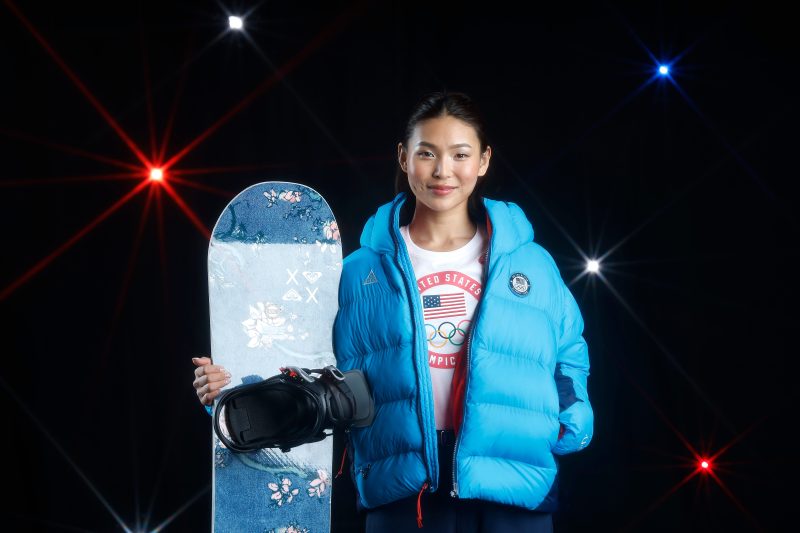
Chloe Kim is preparing for the 2025-26 season, which includes the 2026 Winter Olympics.
Kim sought intensive therapy after the 2022 Beijing Olympics to address her mental health struggles.
She is partnering with the Ad Council’s “Love, Your Mind” campaign to promote mental health awareness.
Kim credits her therapist and a strong support system of family and friends for helping her reach a better place.
The roughest time of the year for Chloe Kim – the offseason – is almost over.
The two-time Olympic gold-medal snowboarder’s first event of the 2025-26 season – which includes the 2026 Winter Olympics – starts this month. Sometimes, Kim’s anxiety fuels thoughts that she’ll wake up one day forgetting how to snowboard, as if the 25-year-old didn’t become the first woman to repeat as the Olympic halfpipe champion at the 2022 Beijing Games.
“But the minute I get my snowboard on, I’m like, ‘Oh, why was I being so dramatic? I’m totally fine,’” she said.
Get our Chasing Gold Olympics newsletter in your inbox for coverage of your favorite Team USA athletes
Kim spoke to USA TODAY Sports in November through her partnership with Ad Council’s “Love, Your Mind” campaign that included other elite athletes such as Paige Bueckers, Bijan Robinson and Karl-Anthony Towns.
“Obviously I was super down and into it because mental health is a very important topic to me,” Kim said. “So whenever we can continue to spread that messaging it’s what I’m here for.”
Kim went into detail about her mental-health struggles following the 2022 Olympics, the upcoming Olympic season and her relationship with Cleveland Browns defensive end (and likely NFL Defensive Player of the Year) Myles Garrett.
Questions and answers have been lightly edited for length and clarity.
Question: When did you really start to take stock of your mental health?
Answer: It was something I struggled with during COVID. I think it was, what, 2021 at the time? I think I tried to do things by, I don’t know, getting into self-care and whatnot. But my mental health got really bad, honestly, a couple of years ago. At that point I started doing intensive therapy and really like feeling a lot of things I have experienced in the past and finding better ways to cope with all the stress and pressure that inevitably comes with being a professional athlete. And I think that I am in a better place now, which I’m feeling grateful for.
That intensive therapy, was that pre-Beijing, or after?
Kim: It was after.
That was definitely a stressful Olympics for a lot of people. Did that “bubble” atmosphere have an added effect or was it typical post-Olympics blues?
Kim: I think it was just an accumulation of events. I think I was somebody that had found success at such a young age and was given very adult responsibilities at a young age. I think when you’re so young and going through your formative years, it’s very confusing to be put in that type of position. I think that there were a lot of things that I had experienced that were abnormal in a lot of ways. I am such a social butterfly and I think it really started when I felt that many people couldn’t relate to what I was going through and I started villainizing myself and thinking I was the problem. I think as I grow older, I continue to harbor those feelings of, I don’t know, just like – I just didn’t like myself that much. And I wasn’t my biggest fan. And I think that took a toll on me after ten-something years and I think as I experience more pressure and more expectations, I’m very hard on myself. I think all of that had to blow up at some point. I had to hit rock bottom to see that I needed to take care of myself. I think COVID was the thing that, I don’t know, caused it to explode.
Get Olympics updates in your texts! Join USA TODAY Sports’ WhatsApp Channel
I think a lot of people probably felt that way, too.
Kim: Yeah, I think even interactions with my friends and family were so awkward because I was so afraid of getting COVID going into the Olympics, something that I trained for could go away completely if I caught it. I think it was hard for me to find support and just a sense of community my way. It was there for me. But I think I was just so afraid of the what ifs that I inevitably isolated myself. That really took a toll on me. After the Olympics, it just got really bad. So, really grateful for my therapist. She’s the best. I owe her a lot.
Shoutout your therapist. Shoutout all therapists. Are you able to find that sense of community you mentioned with your fellow Olympians? Fellow athletes?
Kim: Absolutely. That’s kind of what I’m realizing now. When I look back at my old self I’m like, Oh my gosh, I was so silly for isolating myself in so many ways because I have such an amazing community. My family’s amazing – I’m so grateful to have them, they’re so supportive and always there for me. My friends are amazing, love every single one of them so dearly, and so grateful for them. I have an amazing support system. I just think that when you are at your lowest low, it’s hard to see that. You kind of need to get to a point where you realize, ‘Oh my gosh, I’m not OK.’ So I’m really happy I went through that process because now I can reflect and look around me and be just so grateful for the people I do have in my life, because they’ve been there since day one in a lot of ways.
Where are you at in your training right now?
Kim: I just got back from a training camp, which was really nice to get my feet back. My first competition is actually in the middle of December, it’s in Colorado. And yeah, I feel good. I think I’m trying to stay consistent and maintain my routine and treat it like it is any other season – because it is like any other season. I think it’s very easy to get riled up going into the season because you don’t know what’s going to happen, and sometimes I panic, and I’m like ‘What if I wake up tomorrow and don’t know how to snowboard? What if I just don’t know what I’m doing anymore?’ It’s like a weird, anxious thing I have. But the minute I get my snowboard on, I’m like, ‘Oh, why was I being so dramatic? I’m totally fine.’ So I think right now is probably the roughest time for me, but then the minute I’m back on snow and doing my thing I’m all good.
I know you have to go and this has been awesome, but real quick. Before you met Myles, did you know how good he was?
Kim: I grew up in a very Korean household, so we didn’t really watch American sports, or sports in general. It was whatever my dad was into. I guess my dad did watch football when he first came to America, but when I came around, it was a lot of, like, golf, tennis, things of that sort. So it’s actually funny that we’re in this position right now, because I had no idea who he was. Like, zero idea. I actually don’t know many, many athletes. Like I know Tom Brady and LeBron James. That’s my extent, that’s all I know. But now I’m all about it. But honestly, Myles is such an incredible athlete. I’m constantly inspired and in awe of him and how hard he works and how incredibly kind he is. He genuinely is one of the kindest people I think I’ve ever met. I’m really lucky to be part of his life and lucky that he’s part of mine. Yeah, we’re happy.