













MILAN — If the headlines and captions look the same and seem redundant, it’s because they are. This happens every Olympic Games now, winter and summer, for the U.S. Olympic team:
‘Girl Power.’
‘The Women’s Olympics.’
‘Team Title IX.’
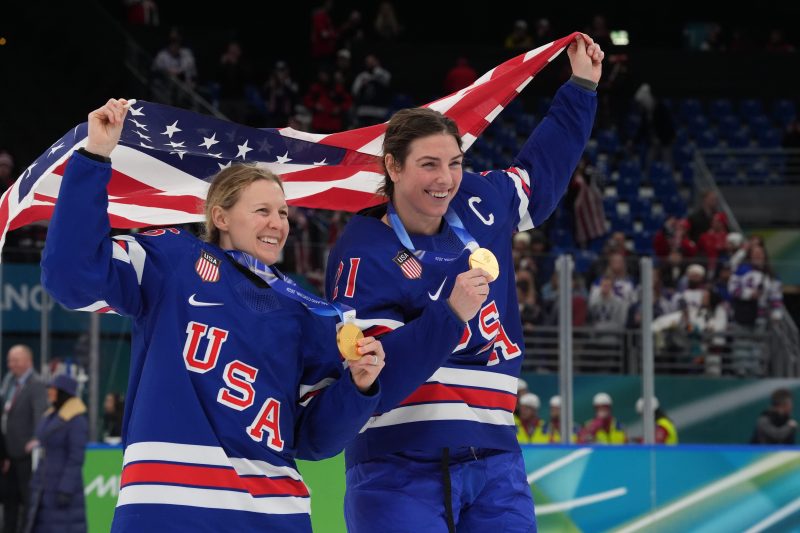
As the 2026 Winter Olympics have come to a close, for the third consecutive Winter Games, U.S. women have won more gold medals and more medals overall than U.S. men. The final tally here in Milan: American women won six gold medals and 17 medals overall. The U.S. men? Four golds and 12 overall. Two other gold medals and four overall (the U.S. ended up with an historic 12 golds and 33 overall) were in mixed gender events.
This mirrors what is happening in the much larger Summer Olympics, in which U.S. women have won more golds and more medals than U.S. men for the past four consecutive Summer Games, going back to the 2012 London Olympics. In Paris a year and a half ago, U.S. women won 65% of the 40 gold medals won by Americans (26-13, with one won in a mixed gender event.) And they won 68 medals overall to 52 for the men, with six in mixed events.
‘It’s always exciting to see the women of Team USA rise to the top of the podium,” U.S. Olympic & Paralympic Committee CEO Sarah Hirshland said in a statement to USA TODAY Sports. ‘In Milano Cortina, they’ve competed with dominant strength and confidence. We’re proud not only of how they perform, but how they represent Team USA off the field of play — especially as veterans mentor rookies and carry forward the values that define the United States Olympic Team at the 2026 Winter Olympics.”
The reason for all the U.S. women’s success? It’s Title IX, the law signed by President Richard Nixon in June 1972 that opened the floodgates for girls and women to play sports and created the mindset of opportunity and participation that dominates American youth, high school and college sports to this day.
Consider what the U.S. Olympic team would look like without Title IX. Without the law pushing high schools and colleges to add girls’ and women’s sports over the past five decades, there would be very few if any women’s NCAA hockey programs, or soccer, softball, basketball or volleyball for that matter. And without those women’s college teams as the feeder system for the U.S. Olympic team, there would be far fewer medals for the United States at Winter and Summer Olympic Games. And even in those Olympic sports that aren’t traditional college sports, Title IX’s empowering influence on American culture has had a significant impact on all U.S. female athletes.
The world has noticed for quite some time. At the 2012 London Summer Olympics, which was the first time women outnumbered men on the U.S. team and the first time they won more gold and overall medals, British prime minister David Cameron said his country needed to encourage more competitive sports opportunities in schools, just like Title IX in the United States.
With the emergence of U.S. women’s professional sports leagues, allowing athletes to compete and train far beyond their college days, the dominance of American female athletes is all but certain to continue for years to come.
‘These Olympics have showcased the global impact of Title IX more than 50 years after its passing,” women’s sports legend Billie Jean King texted USA TODAY Sports on Sunday. ‘One of the biggest indicators of the power of the legislation is the establishment of professional sports leagues, like the Professional Women’s Hockey League, which provides women athletes opportunities to continue to compete after the Olympics and make a living playing the sport they love. These opportunities in the future are why it is important we continue to protect the legislation and intent of Title IX for all.’
King, who helped provide funding and support for the PWHL, said 61 players from the league competed in the Milan Olympics and 39 were in the gold medal game won in overtime by the United States over Canada.
Another reason more women’s medals are being won is because there are more medals for women to win. There was a time when the International Olympic Committee and the federations of worldwide sports refused to allow women to compete in as many events as men in the Winter and Summer Games. That’s changing; during the 2026 Olympics, the ratio of female to male competitors narrowed to as close to 50-50 as it has ever been in the Winter Games: 47% women, 53% men, according to the IOC.
The long climb to allow women to compete in events that have been male-only in the Winter Olympics has just a small ways to go now: The only event in which men competed here, but women did not, is Nordic combined.
So give U.S. women opportunities their grandmothers never had, thousands of college teams to play on and professional opportunities that didn’t exist a decade or two or three ago — and they will not be the only ones to benefit. The nation’s Olympic fortunes will too.
USA TODAY Sports columnist Nancy Armour contributed to this report.