












CORTINA D’AMPEZZO, Italy — Regardless of where Mikaela Shiffrin finished, her team got a win in the giant slalom.
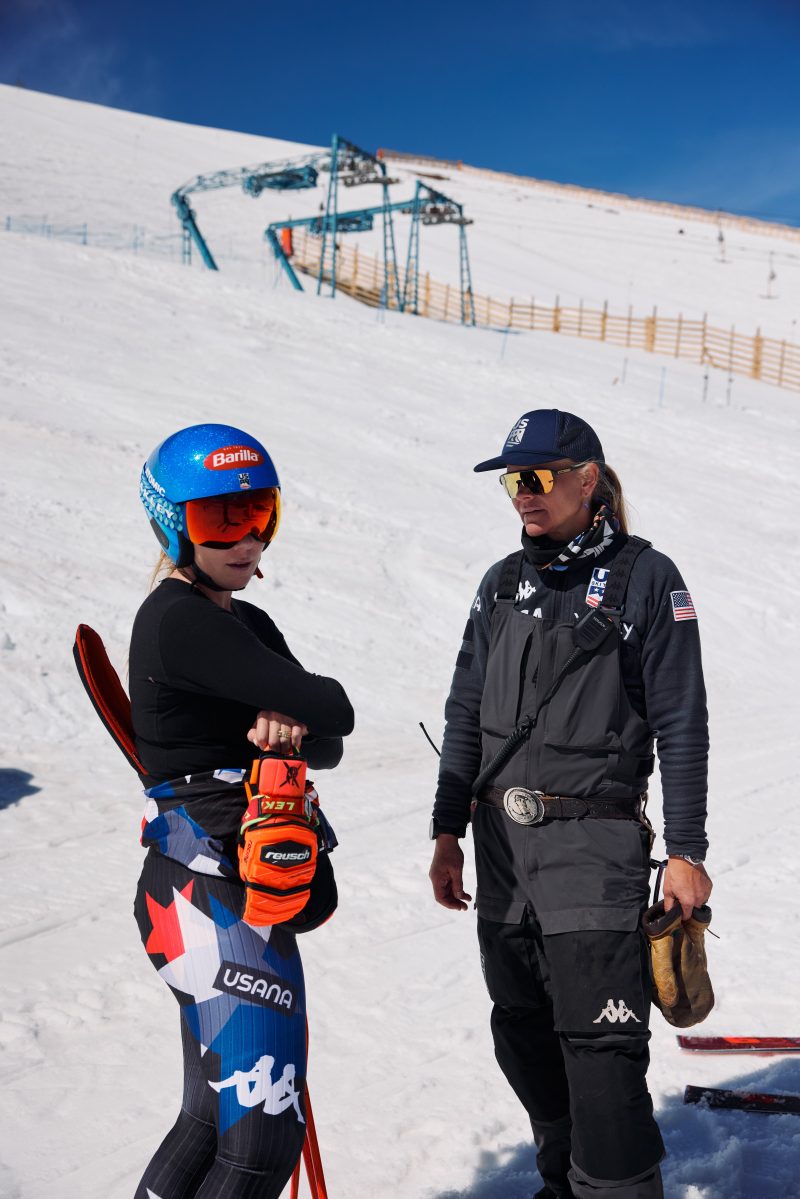
On Sunday, Feb. 15, Shiffrin’s coach, Karin Harjo, became the first woman to set a course for an Olympic Alpine skiing event. Harjo set the course for the second run of the GS at the 2026 Milano Cortina Olympics.
The person who sets the course determines its profile: Where the gates are and how they’re spaced, whether a course is straighter or more winding. Because a coach can set a course to suit his or her skier’s strengths, it’s a coveted assignment, one that is doled out on a rotating basis.
“This is for your daughter’s daughters,” Harjo said in a release from U.S. Ski and Snowboard. “We’re in 2026 and it’s the first time, but the reason is because of Mikaela. She set out to lift up women in sport, whether it’s competitors, coaches, workers. Through her greatness, she’s providing the opportunity for women to rise and pave a path for everybody behind us.”
Shiffrin finished 11th in the GS but was just 0.30 seconds from the podium. Paula Moltzan, the Olympic bronze medalist in the team combined with Jackie Wiles, was 15th while Nina O’Brien jumped up to 20th with the fastest time in the second run.
This isn’t the first time Harjo has broken barriers. She was the first woman to set a World Cup giant slalom course, last March, and also was the first woman to set a World Cup slalom course, in 2016.
‘Karin is an exceptional human being, leader and coach,’ Shiffrin said in a message to USA TODAY Sports. ‘I’m so inspired by the work she does. I’m confident it will also inspire the next generation of athletes and coaches.’
Shiffrin hired Harjo away from Canada, where she was only the second woman to be head coach of a national team, before the 2023-24 season. She did so because of Harjo’s skills – the two had worked together when Harjo was a U.S. assistant – but also because she wanted to put a spotlight on women in the sport.
“Sometimes there’s this unspoken question. Not something bad, but people will go, ‘Can she do it?’ It’s not about gender necessarily. But it does answer that question, yes, we can do it,” Harjo told USA TODAY Sports in March 2025, ahead of setting the World Cup GS course.
“Then it becomes a norm. Then you have other women coming in to lead teams, whether it’s for a discipline or a country. And that change becomes the norm.”