



Penn State fired former coach James Franklin midseason following a three-game losing streak and disagreements over NIL funding.
Athletics director Pat Kraft’s search saw multiple candidates, including Matt Rhule and Curt Cignetti, use Penn State’s interest to secure extensions at their current schools.
The tumultuous 54-day process included a leaked team meeting audio and former coach James Franklin flipping recruits to his new job at Virginia Tech.
After making the decision to fire former coach James Franklin at the midseason point, with the Nittany Lions on a three-game losing streak and the year slipping away, athletics director Pat Kraft reportedly reached out to an individual believed to have the ear of the Iowa State coach.
But Kraft, who ran the search without an outside firm or committee, apparently failed to reach the right person, and the attempt at making contact never reached Campbell.
Months later, after one of the most scrutinized coaching searches in recent Power Four history, Kraft made a second run at Campbell, this time reaching the right intermediary, and found a candidate receptive to the Nittany Lions’ interest.
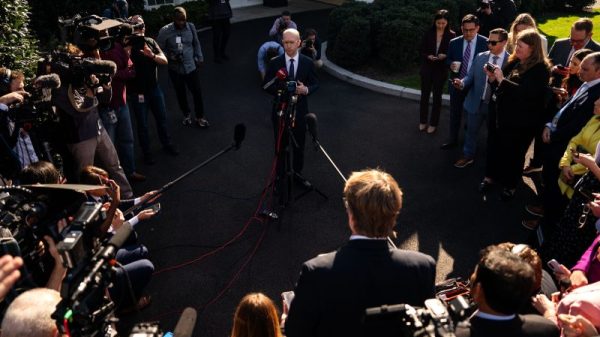
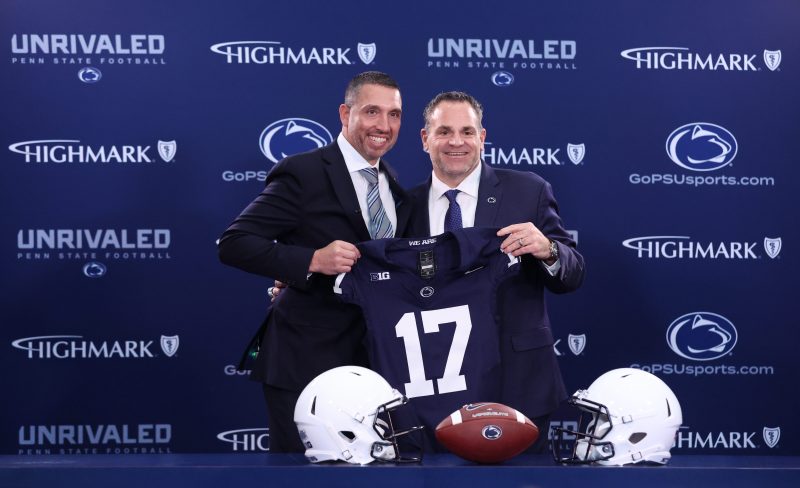
“It’s a dream come true for me,” Campbell said at his introductory press conference.
“Matt Campbell is one of the most respected coaches in the country and he has earned that,” said Kraft. “Matt Campbell is Penn State: Hard-nosed, humble, relentless, a developer of young men, and he’s built for championships.”
Penn State was under pressure to make the right hire
Before reaching this point — hiring one of college football’s most well-regarded figures, one who rebuffed countless opportunities over the years to remain at Iowa State — Penn State faced the public embarrassment of seeing multiple established Power Four head coaches parlay the opening into lucrative contract extensions.
For Kraft, there was also a leaked audio recording of a team meeting called at the players’ request that included potshots at Oregon, Michigan and the way the previous staff had used NIL.
At the same time, the school watched as Franklin landed at Virginia Tech and quickly flipped verbal commitments from the Nittany Lions’ depleted recruiting class, which included just two signees during the early period.
If able to look past the 54-day period between Franklin’s dismissal and Campbell’s hiring, Penn State did achieve the end goal of hiring a proven Power Four commodity who won at an unmatched rate with the Cyclones and could be even more effective with his new school’s deeper resources.
But it’s impossible to ignore the winding path from the end of one coaching tenure to the start of another — one that Kraft said at Campbell’s press conference could “be a Netflix documentary at some point.”
In part because of the dramatic search, Campbell will face immediate pressure to reverse the Nittany Lions’ one-year swoon and bring the program back into Big Ten and College Football Playoff contention.
Failing to do so would almost assuredly cost Kraft his job. “If I don’t get this right, my career is over,” he said in audio from the leaked team meeting. “Understand that. If I don’t hire the right person, my career is over. So it’s very serious to me.”
Penn State coaching search got off to slow start
The decision to fire Franklin came down to mismatched personalities, stubbornness and a significant difference of opinion over how the Nittany Lions should allocate NIL funding Kraft ranked in the top four nationally.
Unlike many programs, Penn State had chosen a “spread the wealth” tack in NIL, with most players receiving a relatively equal share, instead of the typical top-down funding that pays an established starter more than, say, a freshman backup.
There was a sense from the start of Penn State’s search that personality would matter nearly as much as proven production as a college coach. That’s why one of the Nittany Lions’ initial targets was third-year Nebraska coach Matt Rhule, who played linebacker for Joe Paterno from 1994-97, worked under Kraft as the head coach at Temple and is such good friends with Kraft that the two and their families have vacationed together in the offseason.
But less than three weeks after Franklin’s dismissal, Rhule recommitted to Nebraska with a two-year extension that bumped up his buyout to $15 million, effectively taking him off the market. This same scene would be repeated over and again for well over a month.
Rhule was one of two primary candidates right off the bat. The other was Indiana’s Curt Cignetti, a miracle worker who transformed the Hoosiers into a powerhouse and is seen by some coaches as the closest thing the sport currently has to the next Nick Saban.
Amid this interest, Indiana handed Cignetti an eight-year, $93 million extension that made him one of the highest-paid coaches in the country with an annual average salary of approximately $11.6 million.
At least seven other sitting college coaches fielded interest from Penn State and were either extended by their current program, like Rhule and Cignetti, or opted instead for a different Power Four opening.
There was Georgia Tech coach Brent Key, who agreed last week to a five-year extension with the Yellow Jackets. Former James Madison coach Bob Chesney was another trendy contender amid the Dukes’ unexpected march to the playoff, but the Pennsylvania native accepted the position at UCLA, taking him off the Nittany Lions’ board.
Also signing new extensions during this stretch were Vanderbilt’s Clark Lea — hiring another Vanderbilt coach after Franklin might’ve been a non-starter anyway — and Missouri’s Eli Drinkwitz.
Another option was interim coach Terry Smith, who, like many interim promotions, was said to be the favorite of current and ex-Penn State players. But while Smith did an admirable job getting the Nittany Lions into the postseason and nearly pulled off a mammoth upset of Indiana, he was always seen as a last-resort option.
Penn State takes PR hit with some swings and misses
Three other denials made Kraft and this search a national story, especially as other midseason openings such as LSU and Florida hired current playoff coaches in Lane Kiffin and Tulane’s Jon Sumrall, respectively.
The school had zeroed in on second-year Texas A&M coach Mike Elko, who was born in New Jersey, played at the University of Pennsylvania and spent the first decade of his career working on the East Coast. Elko’s focus on toughness, his perennially strong defenses and his 35-15 mark over four years as a college coach seemed to make him a dream candidate.
With the Aggies unbeaten and making a run at the SEC crown, however, Elko removed himself from consideration. That led Kraft and Penn State into an awkward dance with two final Power Four coaches who seemed poised to accept the offer before backing out — all while details of the previously leak-free search began to burst onto national headlines.
Late last month, discussions with Brigham Young coach Kalani Sitake had advanced to the point where Sitake seemed highly likely to be the Nittany Lions’ hire. He had even spoken with potential assistants and planned how Penn State’s roster would look in his first year, according to reporting by the Centre Daily Times.
This mutual interest unraveled yet again, with a major BYU booster, Crumbl co-founder and CEO Jason McGowan, spearheading an increased financial commitment to Sitake and more funding for NIL and his coaching and support staffs.
It was time to “quit all the drama,” Sitake said in early December.
Penn State’s search then turned to Louisville’s Jeff Brohm, who previously worked at Purdue and is known for his coaching chops on offense and development of quarterbacks. For one last time, an established coach rejected the Nittany Lions’ attention: Brohm told Louisville last week that he would be staying with the program.
Kraft shifted to assistants or unemployed former coaches. One was fired New York Giants coach Brian Daboll, though those discussions gained little traction. Penn State also evaluated Ohio State defensive coordinator Matt Patricia, another former NFL head coach, and former Notre Dame offensive coordinator Tommy Rees, who currently holds the same position with the Cleveland Browns.
Matt Campbell and Penn State finally connect
Campbell still loomed as a candidate. After failing to reach him in the wake of Franklin’s firing, Penn State was able to begin conversations with Campbell in early December, according to ESPN. Less than a week later, he was introduced as Penn State’s fifth full-time coach since 1950.
All’s well that ends well, maybe, and all will be forgiven if the Kraft and Campbell partnership results in Penn State’s first national championship since 1986. And those will be the expectations: Every game Campbell coaches, especially early in his tenure, could feel like a referendum on his tenure, Kraft’s future as athletics director and the state of a program dinged by a tumultuous and often chaotic search.
“I know this: It’s my responsibility to each and every one of you, every single step of the way to link arms with you, to unify us, and to continue to push this program to the greatest heights it’s ever seen,” Campbell said.
“I know what I’m inheriting and what my responsibility is. To be honest with you, to link arms with every one of our lettermen, former players, and to unify this football program into the greatest football power in the country, I can’t wait for that opportunity.”